
IN THE STUDIO WITH
CLARA JOYCE
NOVEMBER 2026
IN CONVERSATION WITH INEZ SINGER
Stain painting and layering on canvas are foundational to many of your works. Colours bleed and blend, creating palimpsests of light and shade. Can you explain how this material accumulation informs your practice?
For me, a painting is a surface in the end. So the way pigment accumulates on the surface is important, and perhaps has symbolic qualities for me. The way a layer of paint soaks into another layer feels like the way structures and systems of thinking absorb and bleed into each other.
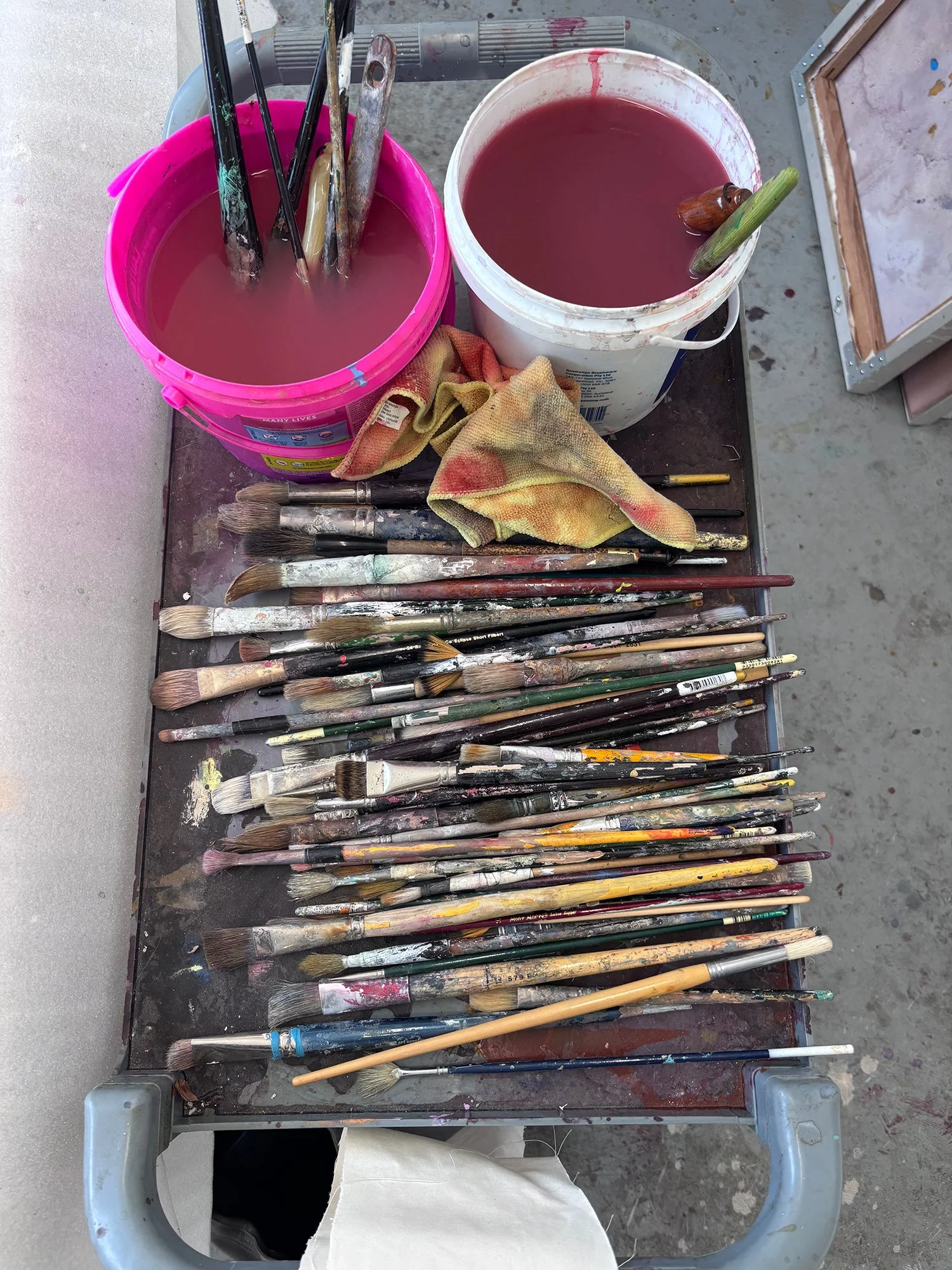
Could you tell me about your specific materials?
My materials are pretty simple–the main ingredient is water, lots of water. I will soak and dry and soak and dry a canvas many times until I’m happy. I like the high flow acrylics because they are the best paint for stain painting. Langridge’s new high flow acrylic range has charmed me, although nothing can beat Golden’s high flow indigo colour; I think that is my favourite colour at the moment. I also like acrylic ink and pastels, any will do. Sometimes lower quality can yield interesting results.
Margarita Kontev wrote of your 2024 exhibition at Cache, Breathing and Chaos, “Clara’s works are clairvoyant. They are to be gazed within not upon.” How do you see the role of the psychic, spiritual and unconscious in your work?
I’m always trying to feel the things we cannot see, it seems very important to me. Within my painting, I am trying to envision and to bring into the material world something that exists outside of it. Which is of course a paradox, attempting to see the invisible, but paradoxes keep things going–they are like little engines in a person’s life or an artist’s practice. For my upcoming show my paradox/engine is seeing a blindpoint or blindspot via painting, which I suppose has spiritual and psychic undertones.
I admire and align with the view that abstraction stems from spiritualist roots. The book Thought Forms by Annie Besant and Charles Leadbeater has been influential in my approach to abstraction; it offers theosophical views regarding the visualisation of thoughts, experiences, emotions and music. I like this perspective because it includes the feminine in the origins of Western Abstraction. Sigmar Polke’s more contrarian ‘spiritual’ and ‘alchemical’ approach also resonates with me. I use inverted commas because he is such an elusive painter and character. And I don’t think he would like any label.
I’m interested in the titling of your work, often poetic and abstract: Warm equation, Breathing and Chaos, As above so below. They’re fittingly dreamlike. How do you choose titles?
Often it’s what I’m reading. Breathing and Chaos came from Franco Berardi’s book Breathing: Chaos and Poetry (2019), where poetry becomes an excess that breaks past the rigid limits of language, data, and financial abstraction. To me painting can do that, if you see it on the right day in the right mood.
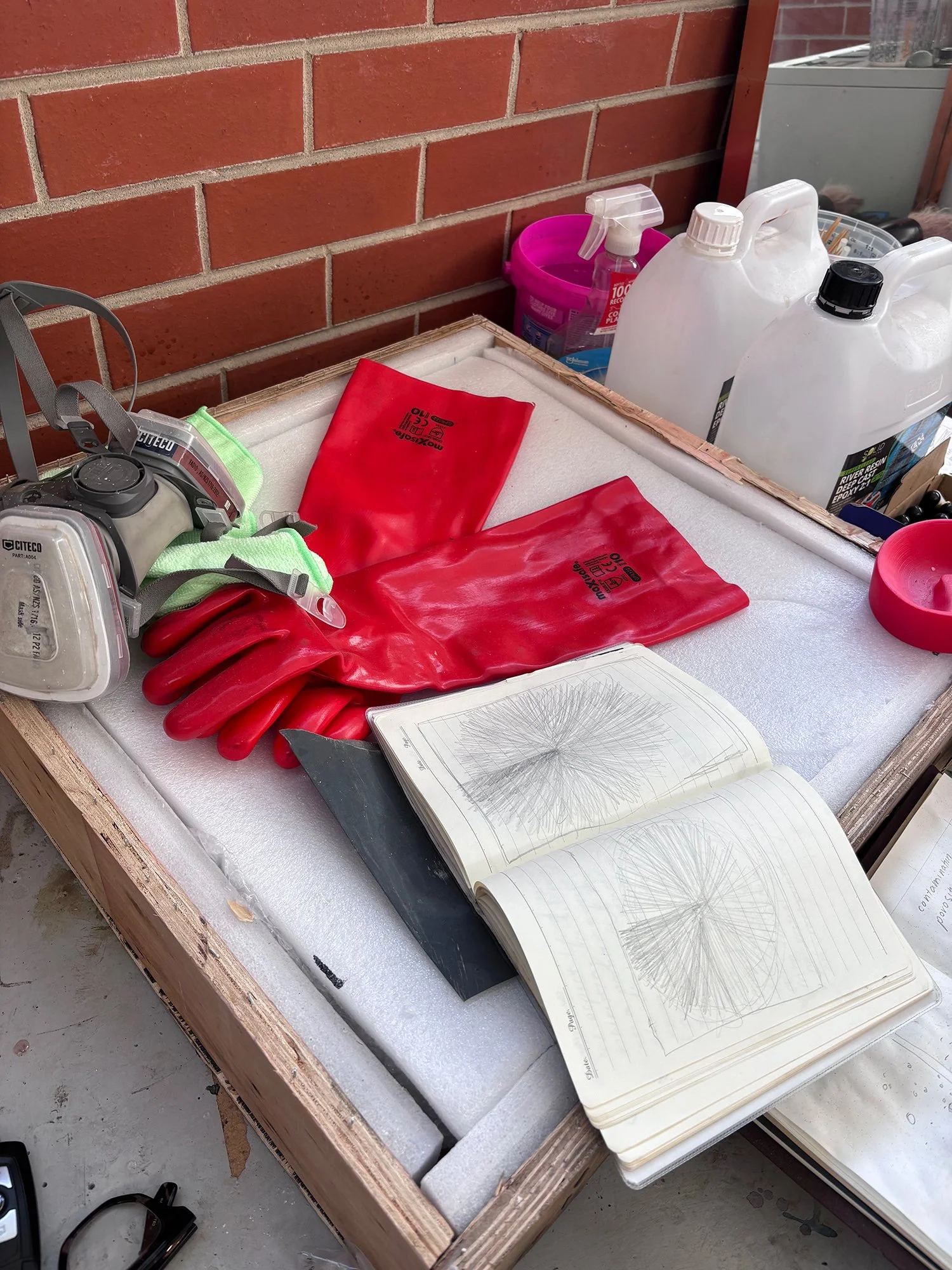
What is your studio space like? Does it influence how you create?
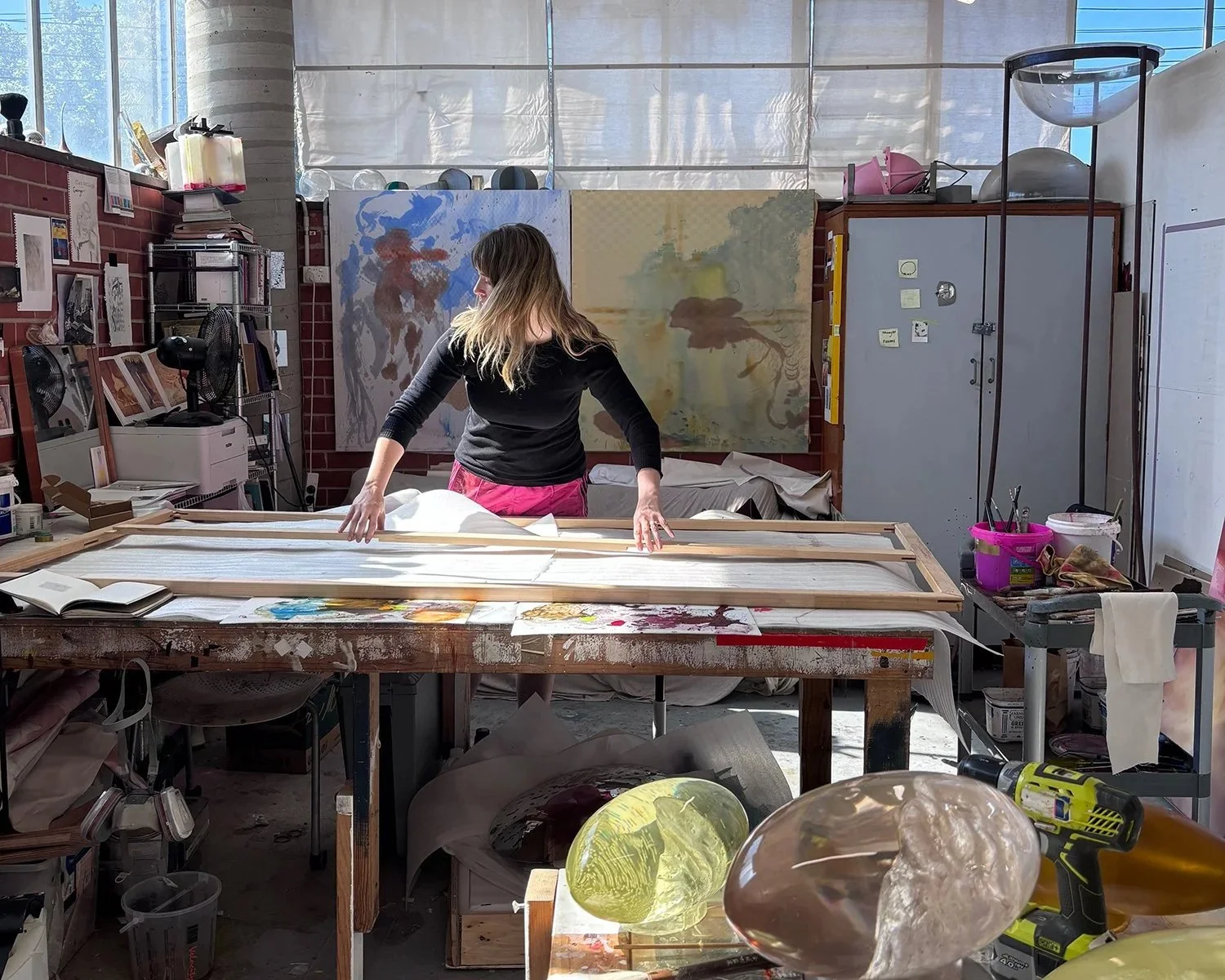
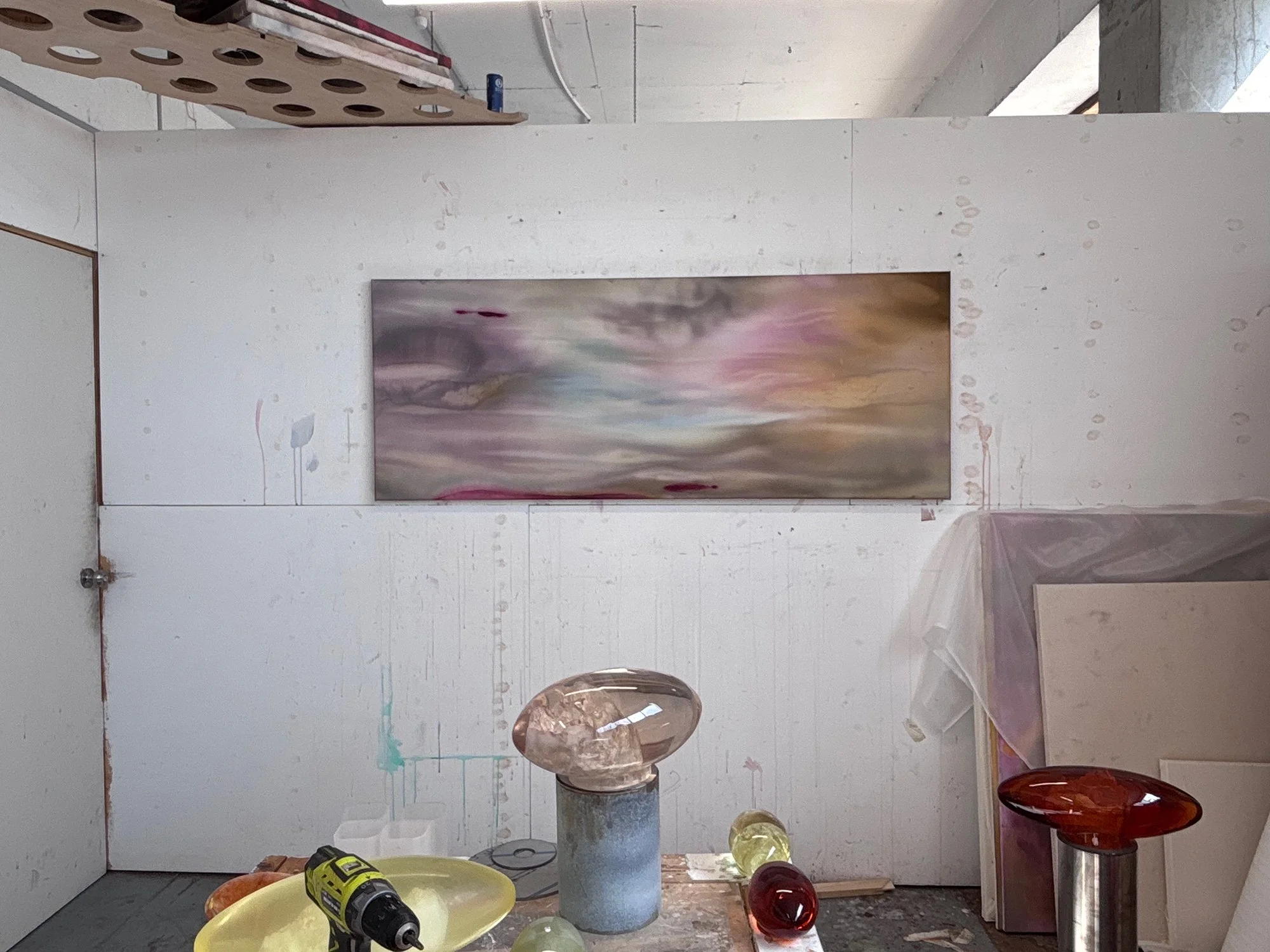
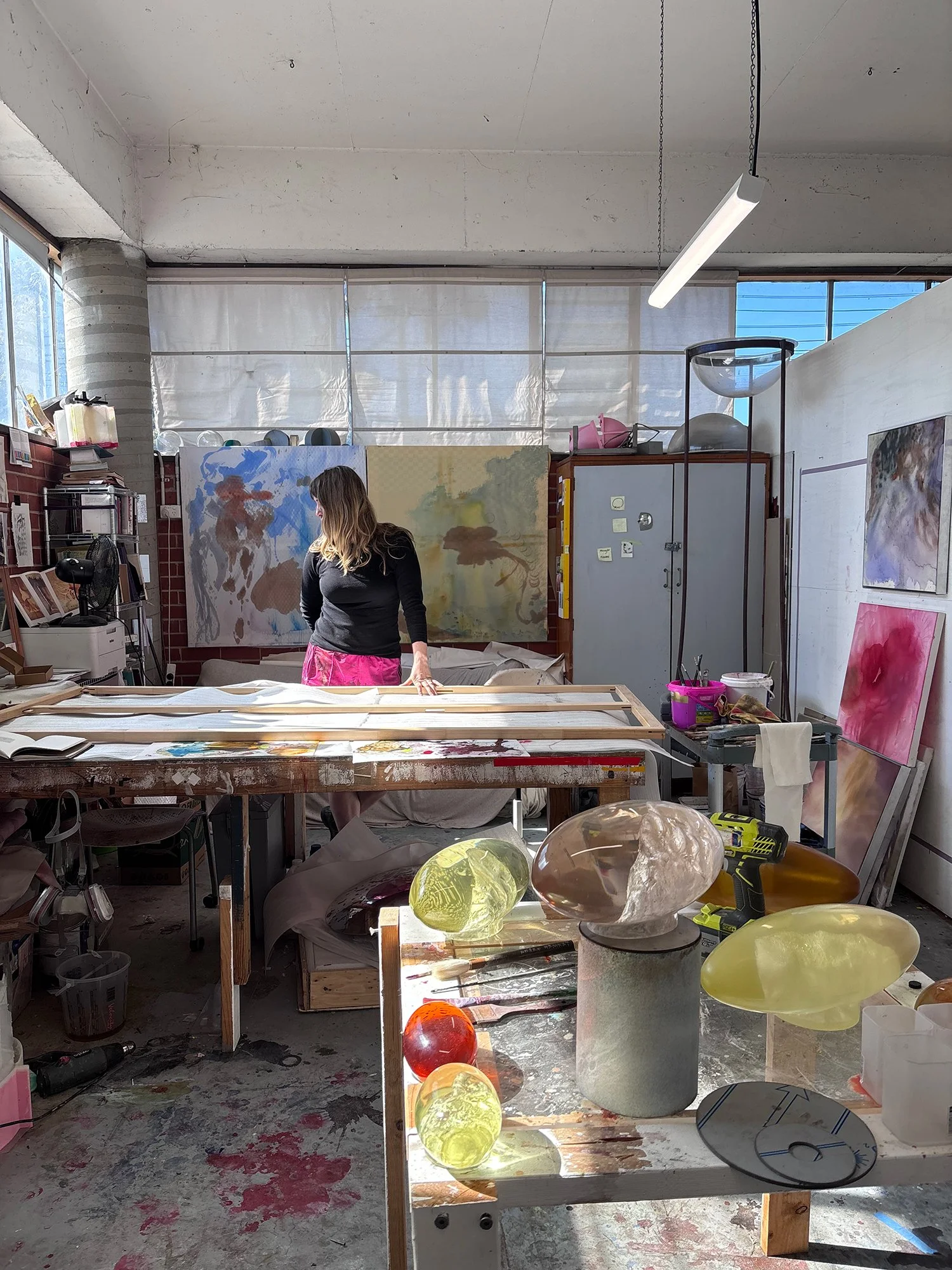
I have a studio at Kippenberger Offices, which is a group of 23 studios my partner Hugo and I started two and a half years ago. My studio is light-filled and pretty messy–if I don’t like something I’ll unstretch it, so there are piles of unstretched paintings. I don’t think it really influences how I paint; I have painted in bedrooms, sheds, spare rooms. But this studio is the biggest I’ve had, so it allows me to make larger works.
You have an exciting year ahead, including a period of research in Cologne via the Anna Polke Foundation. What will this involve? What else is coming up for you?
I’m writing this having just completed my time in Cologne, the program was an interdisciplinary exchange exploring the myth and knowledge of materials in Sigmar Polke’s work. The program involved presentations and discussions from art historians and artists as well as excursions to various galleries across Cologne and the Netherlands. The Anna Polke foundation and participants were fantastic, I’m coming back inspired and with a much deeper material knowledge of painting.
In terms of what’s coming up, I complete my Masters of Fine Art mid year, which concludes a period of research into the stain and its historical, cultural and material significance within painting. I’ll have a presentation of the artwork made during this research at MADA gallery at Monash mid year too.
We have a solo exhibition of your work coming up soon, can you tell us about the exhibition? How have you chosen which works to include?
The paradox/engine of the work is a blindspot, and trying to see it through painting. All vision is made possible by a type of blindspot, where the ocular nerve joins to the retina. And it’s a circle! There is a great quote by Michel Foucault in The Order of Things (1966) where he analyses Velasquez’s Las Meninas. He takes the reader through the whole cycle of representation and discovers an enigmatic blind point at the centre. The spectator of the painting “is situated precisely in that blind point, in that essential hiding place into which our gaze disappears from ourselves at the moment of our actual looking”. I love this idea, this impossibility at the heart of all looking.
Tell me about your process of stain painting? And the significance of staining as a mode of mark-making?
To me, a stain is so bodily and organic–stained clothes, stained sheets, stained tablecloth. The way eucalyptus tannins stain the river brown. The canvas becomes an absorbent membrane, like skin or the cell wall. We are all very porous in the end. We feel even a slight change in the atmosphere. The stain is sensitive.
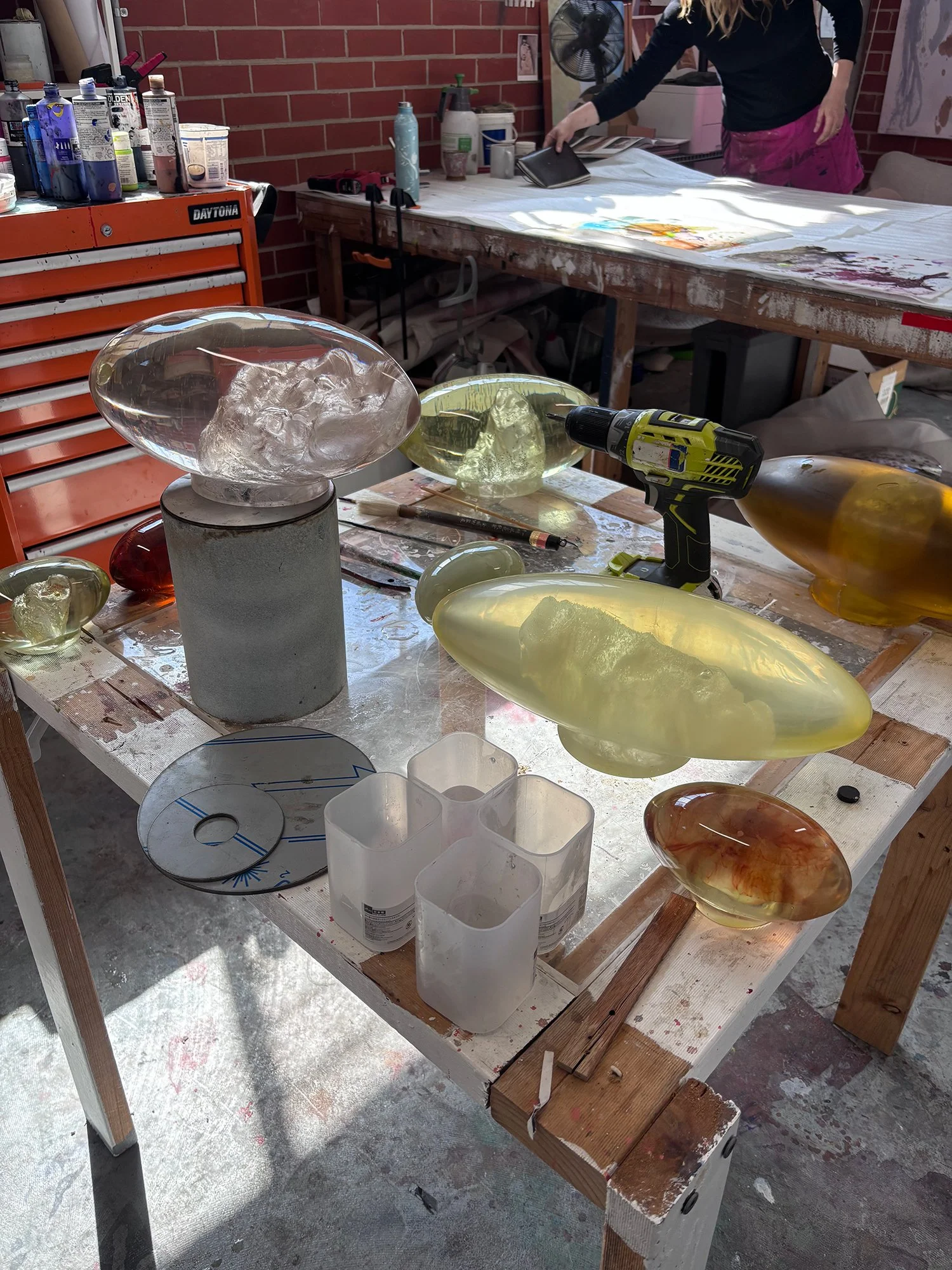
You’ve recently been incorporating more sculpture into your practice with a series of resin works and silicone suspended in resin. What draws you to these mediums? What are the particularities of working with resin and silicone?
Light, I think. As a painter, it’s fascinating to see colour suspended in a clear form of three dimensions. It becomes magnetic to me. And there are certain forms and shapes that bend light to amplify colour. I’m like a moth to a flame.
Colour and colour spectrums are central to your work. Do you consider colour symbolism in your practice? Do you feel an affinity with any particular colour(s)?
Perhaps it’s more the relationships between colours, rather than a particular colour. When working with colour, I think in opposites–when you mix two opposites together, you get some beautiful muted tones depending on the ratios. I think it’s the colours in between that I love.
A brief list, what are you currently:
Reading
A thousand years of non linear history – Manuel DeLanda
Watching
McLeod’s Daughters
Listening
Oklou