
Melbourne Art Fair
Kirsty Budge, Kate Tucker, Matt Arbuckle
17-20 February 2022
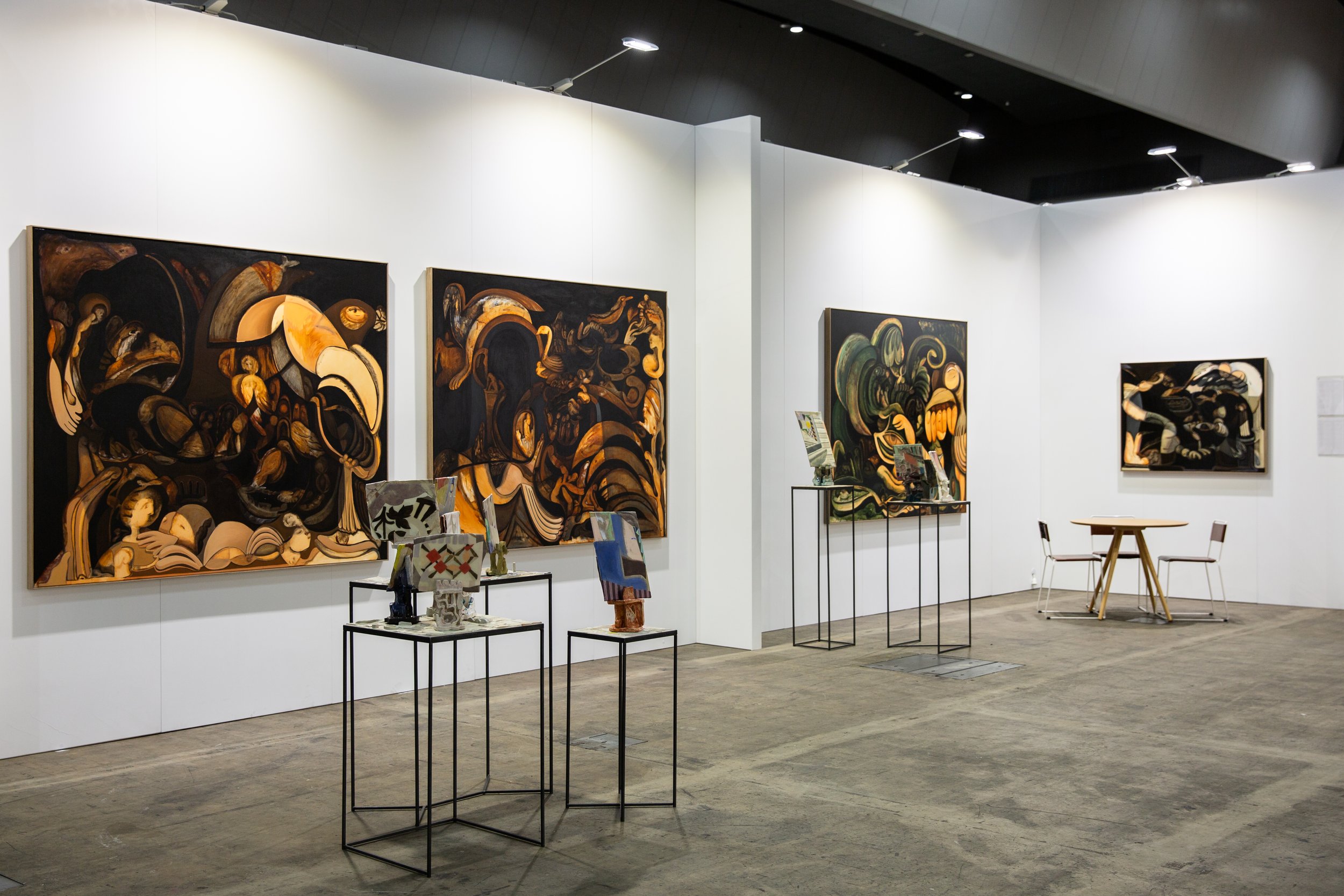
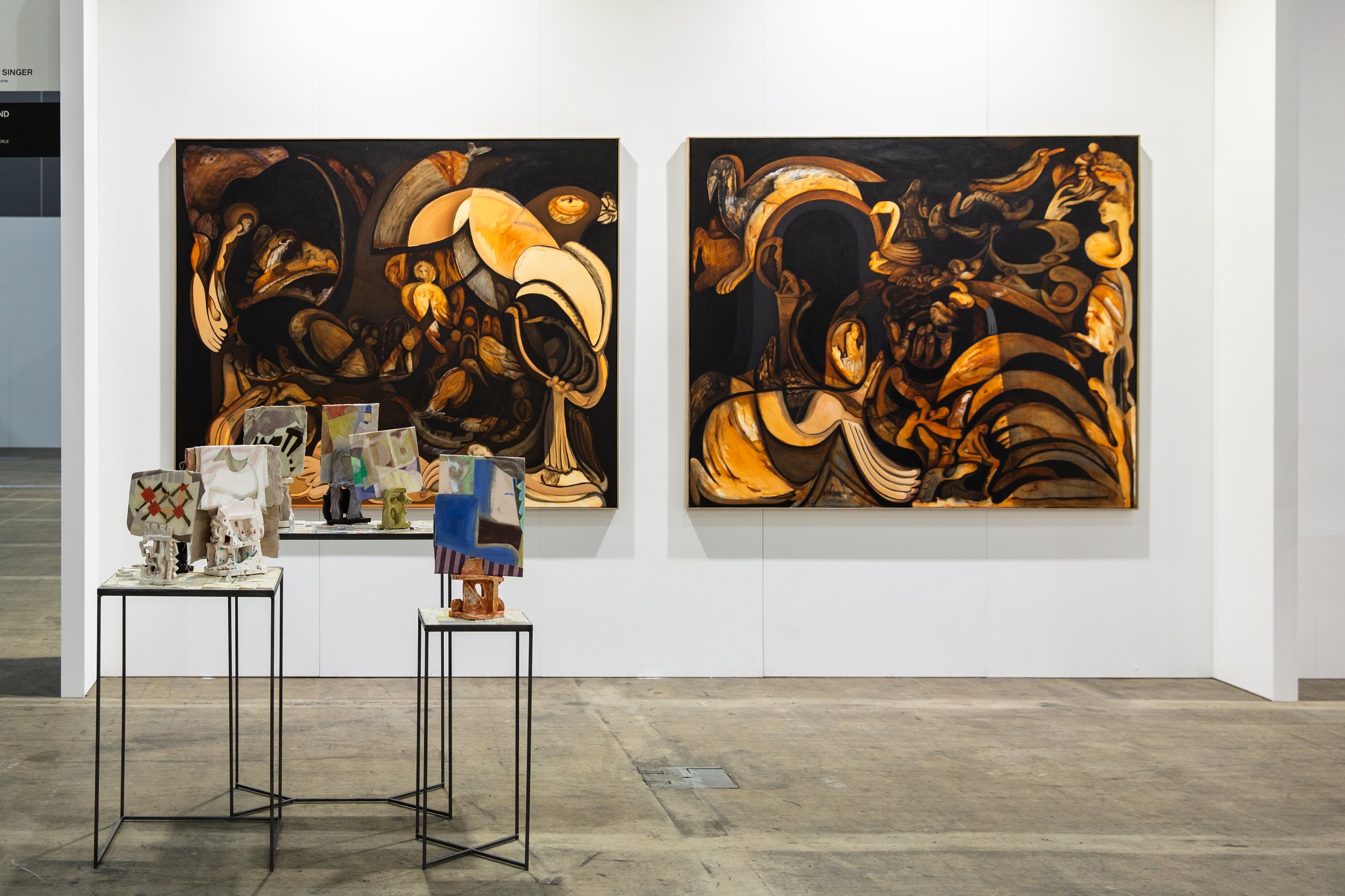
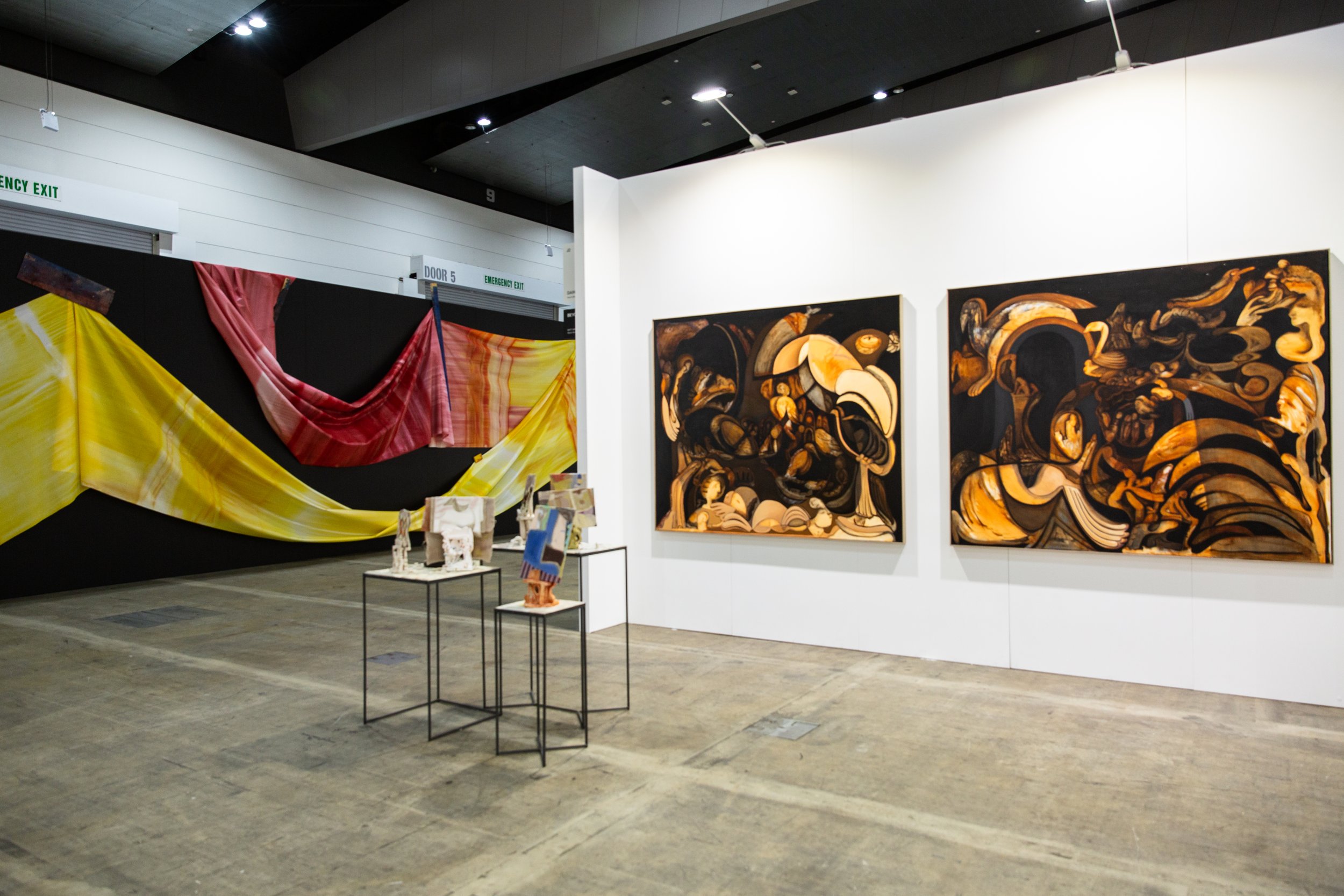
Installation views: Marie-Luise Skibbe
Kirsty Budge
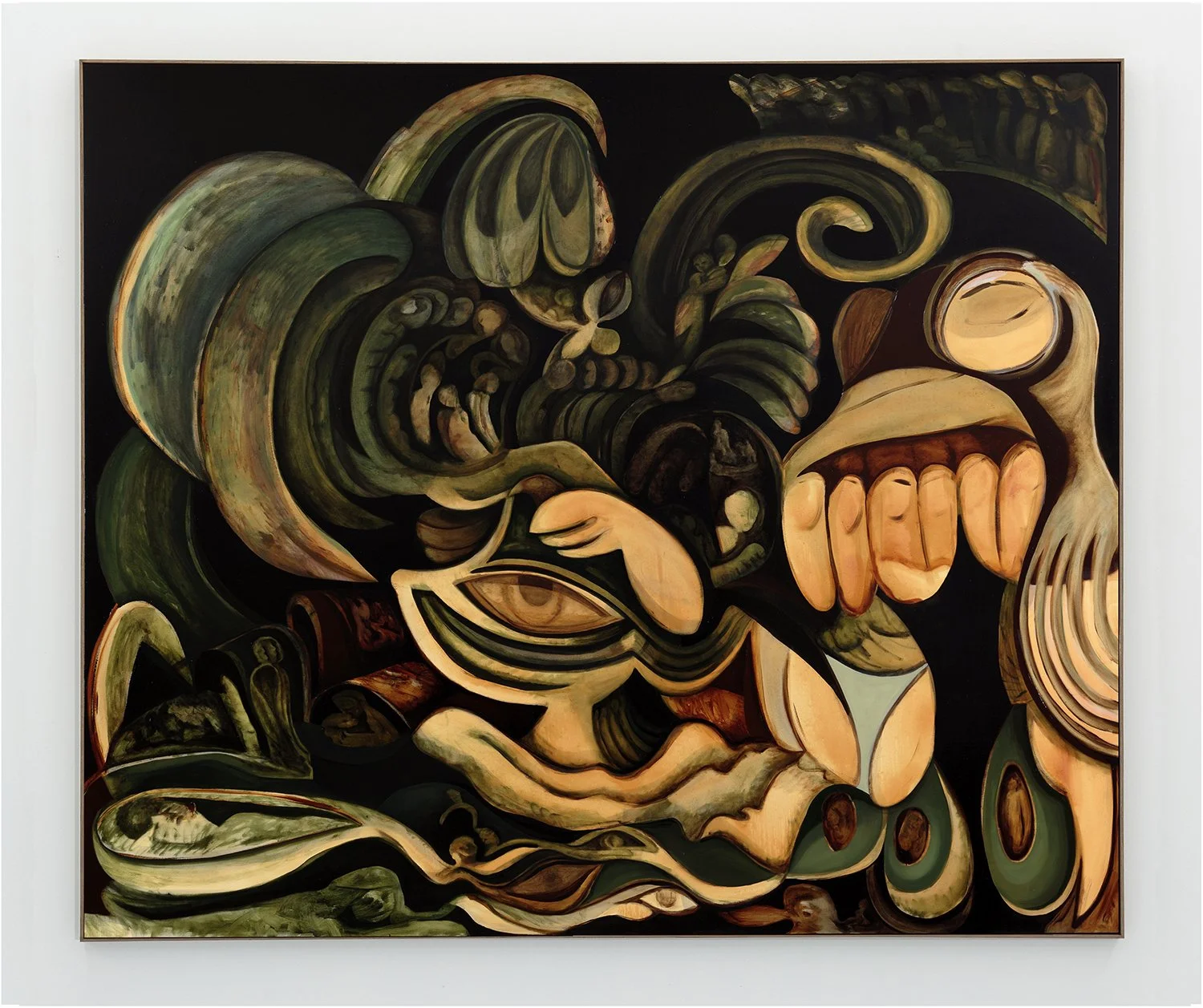


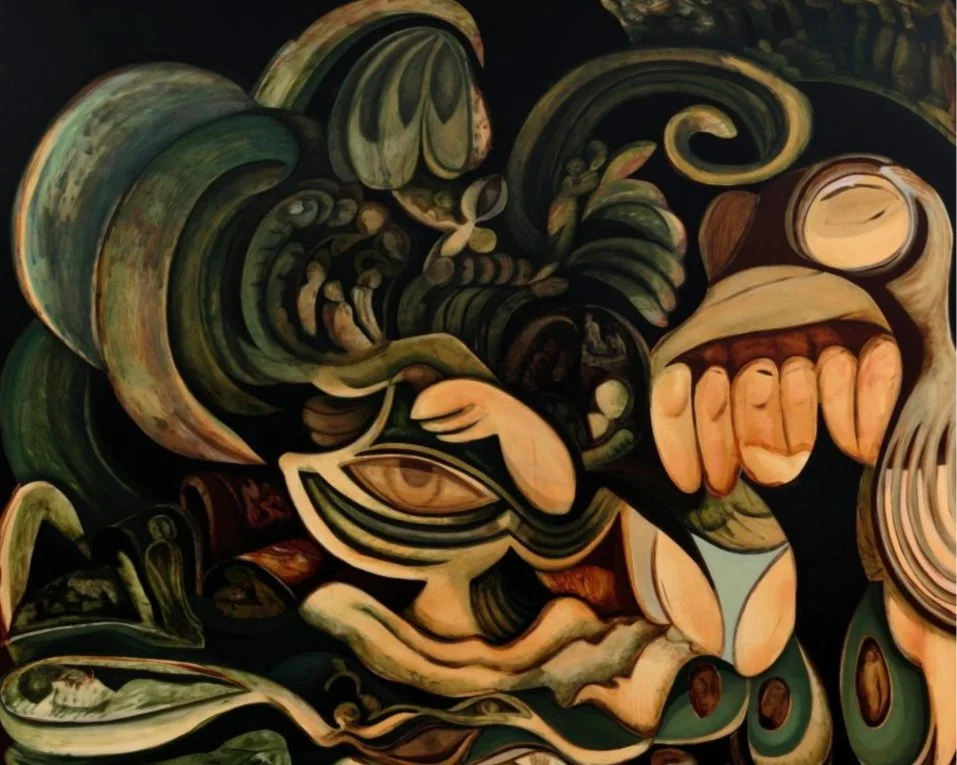
Kirsty Budge’s paintings combine deep introspection and an interest in psychoanalysis with a broader view that embraces the richness of the world. They are a complex and ambiguous mix of figuration, abstraction, personal narrative and landscape.
Budge writes: “These paintings are part of an ongoing exploration into my personal psyche, the collective unconscious and into various coexisting realities. These works hold lots of little landscapes, symbols, mysteries, synchronistic connections, repeated reflections, shadows and mythological references that made themselves proudly and unavoidably apparent during their making.”
Influences feeding into these works include imagery of artworks consumed in books in the studio, specifically sculptures by Camille Claudel, Marisol and Linda Marrinon, and Goya’s etchings from the NGV’s Prado exhibition, which triggered a revisitation of Budge’s earlier experience of Goya’s black paintings in the Prado. Other influences on this body of work are the writing of Janet Frame and Eunice Lipton, and the work of filmmakers Agnes Varda and Richard Linklater, specifically his Before trilogy (Before Sunrise, Before Sunset, Before Midnight). The influence of sculpture on these paintings extends to Budge’s brushwork, as she found herself pushing paint with motions akin to pressing into clay, or removing pigment from the surface, as though carving to reveal under layers.
Budge has used transparent orange for associations of terracotta clay and also of daily moments of pause, the hope at sunrise or reflection at sunset. Through an earthy palette and warm tonal ranges Budge works “to capture a light in painting that is at once visual, religious/spiritual/searching for faith (for lack of better words) and erotic.”
The paintings above all seek to explore the intersection of art and life with all of its attendant complexities. In her works there is a blurring of fact and fiction, personal narrative and cultural references, and an exploration of the border between the imaginary and the real, and the theatre of the surreal. Motifs of bubbles, waves and veils recur with moments of complexity next to moments of simplicity. Out of their energy and complexity these works display a search for healing, coherence and connection.
-
Kirsty Budge is a New Zealand-born, Melbourne-based artist. Recent exhibitions include FAIR by NADA, New York (Daine Singer, 2020); Melbourne Art Fair (Daine Singer, 2020); If you’re gonna spew, spew into this, Daine Singer, Melbourne (2020); The Doing (Daine Singer, 2019); NADA New York (Daine Singer, 2018); Gawkalitis, Daine Singer (2017), The Painters are In, Spring 1883 (Daine Singer, 2016), and I’m not desperate, you’re desperate, Sarah Scout Presents (2016). Group exhibitions include Killing Time, Chapter House Lane (2018); VCA 150 alumni 9x5, Margaret Lawrence Gallery (2017), Painting. More Painting, the Australian Centre for Contemporary Art (2016), Spinnerei Leipzig, Germany (2016), Arthur Guy Memorial Painting Prize, Bendigo Art Gallery (2021, 2019, 2017), Return, Daine Singer (2015), Man, Tristian Koenig (2015); Pretty Shit, Incidents Above a Bar (2015) and Paintings, C3 (2014).
In 2021 Kirsty Budge won the Arthur Guy Memorial Painting Prize. She has undertaken residencies at the Cité Internationale des Arts, Paris, as the recipient of an Art Gallery of New South Wales Studio Scholarship (2018), and at the Caselberg Trust on the Otago Peninsula, New Zealand (2019).
Budge has a Bachelor of Fine Arts (Painting) from the Victorian College of the Arts, where she was recipient of the 2014 Stirling Collective Award for Painting. Her work is in the collections of Bendigo Art Gallery, Artbank and the City of Port Philip.
Kate Tucker
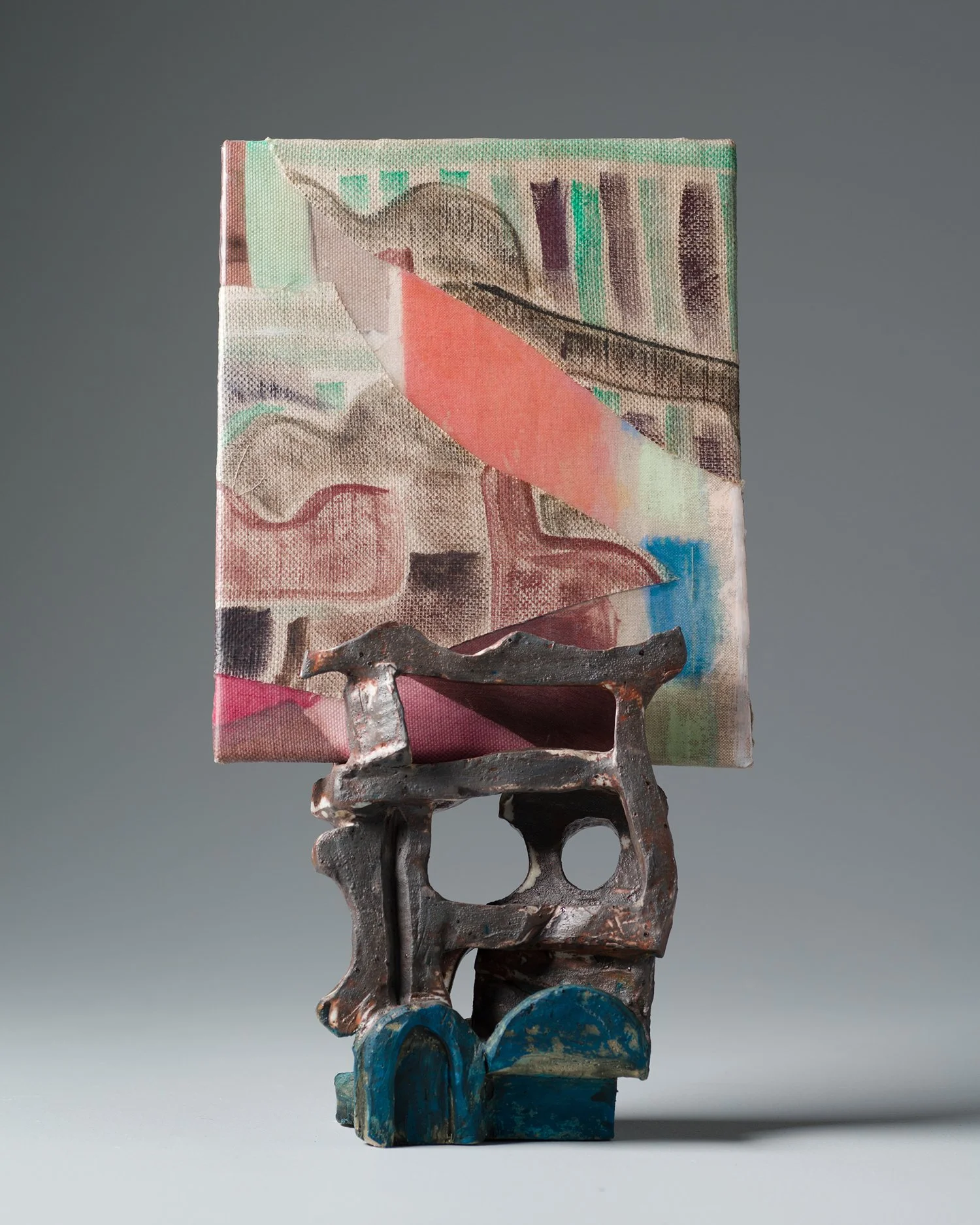


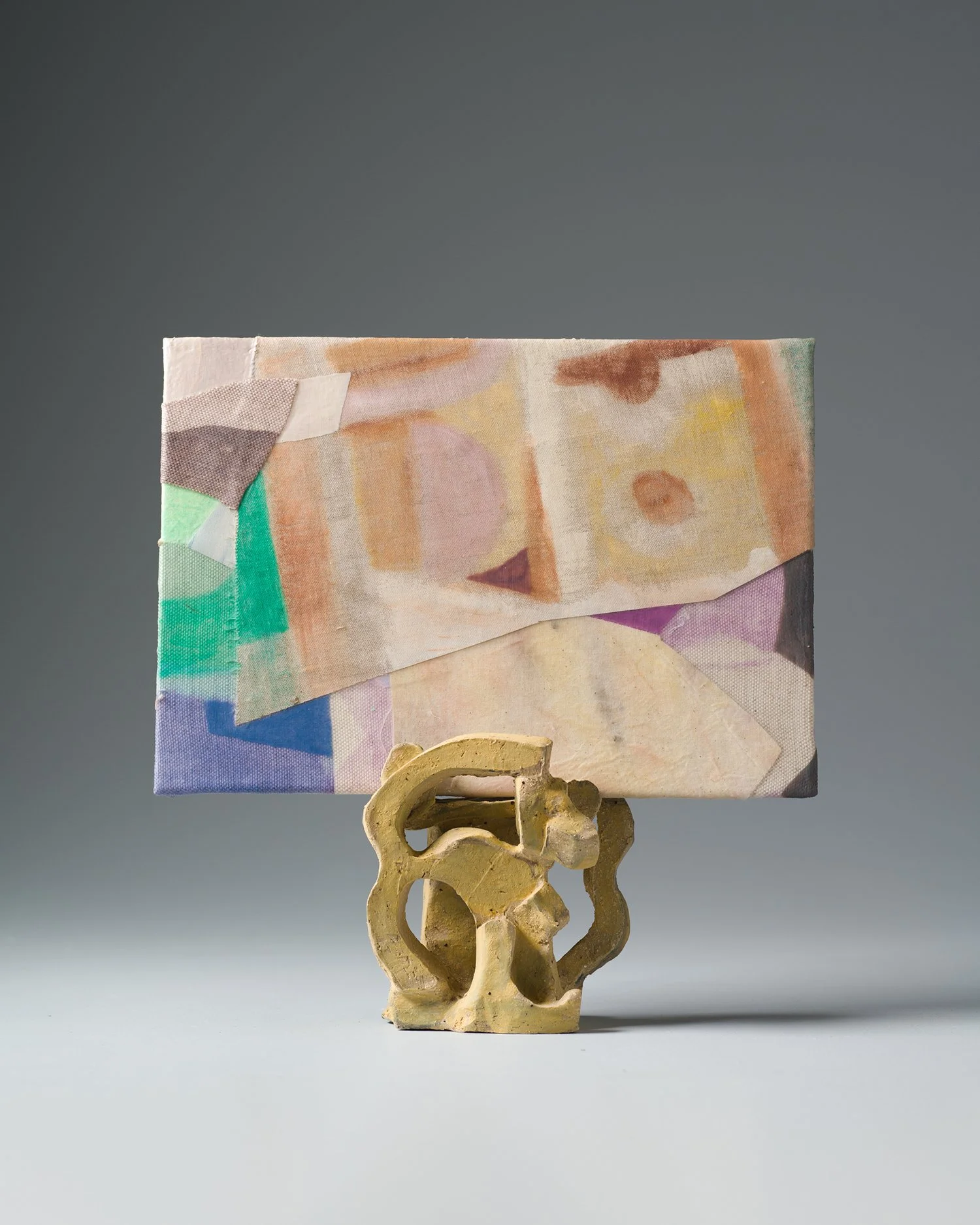
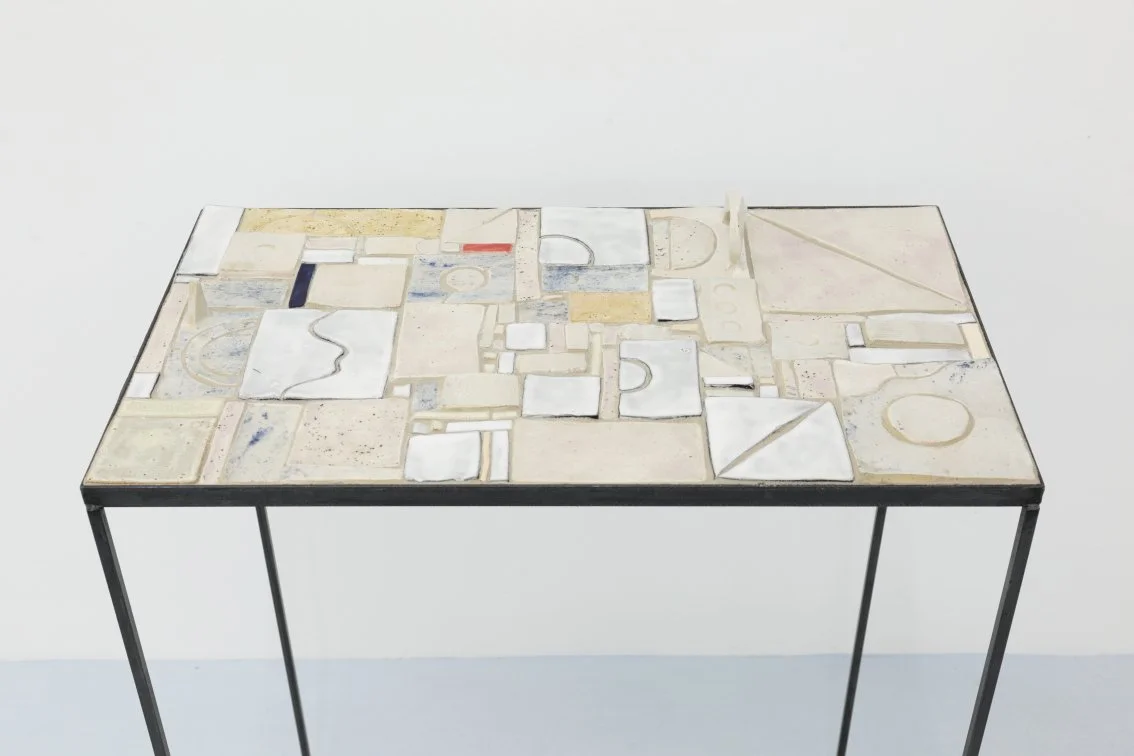
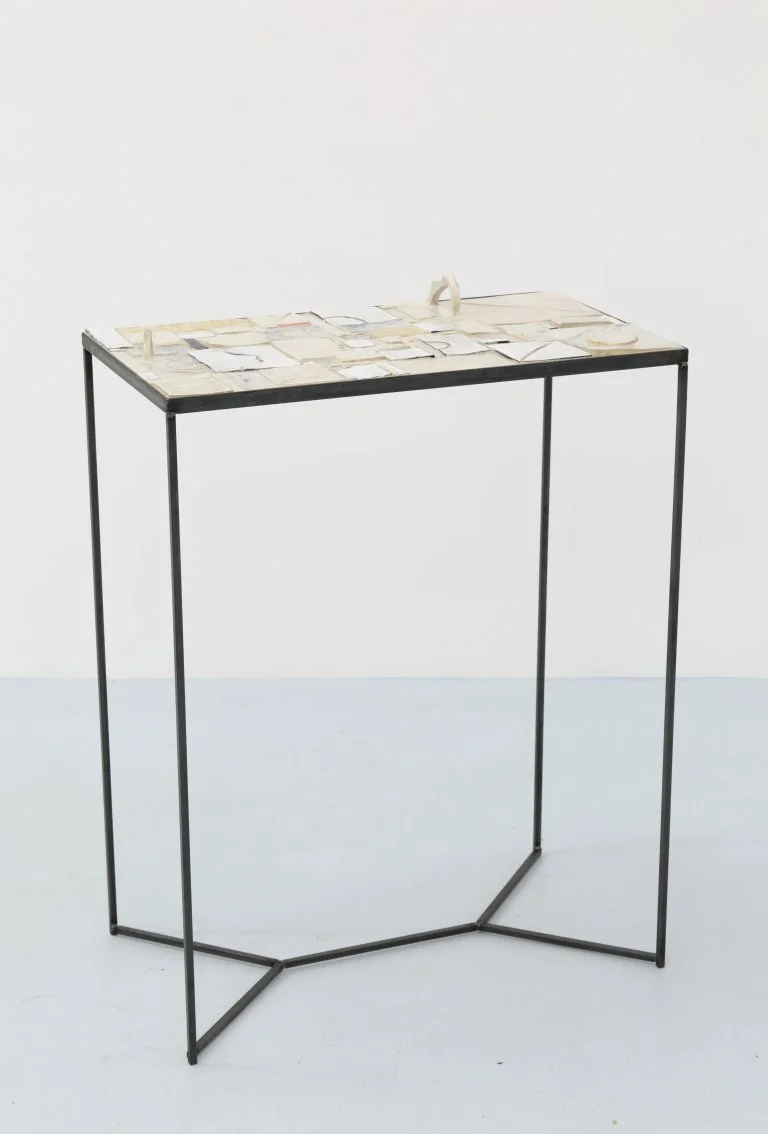
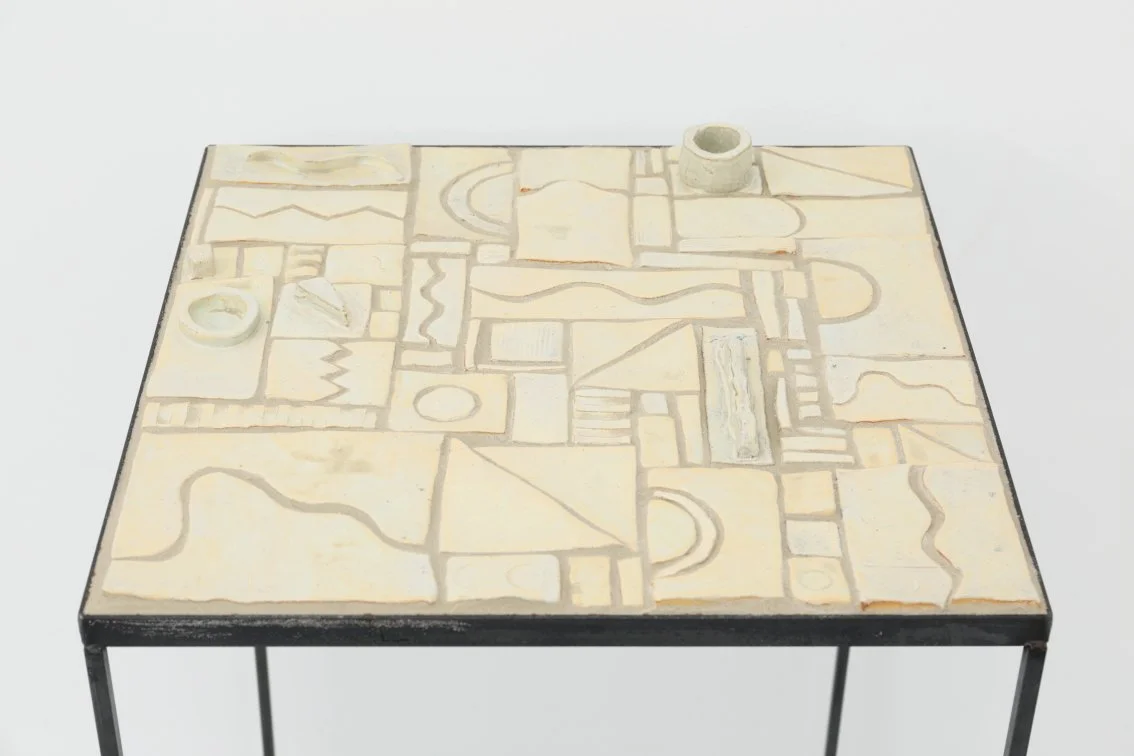
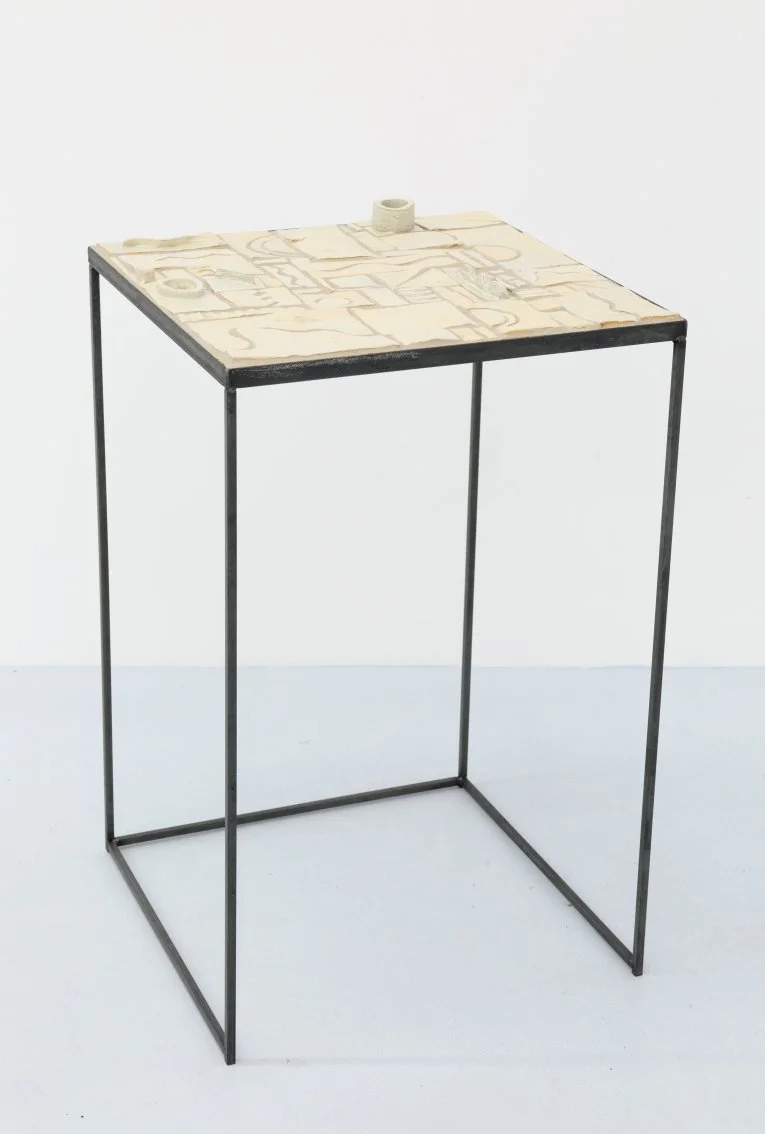
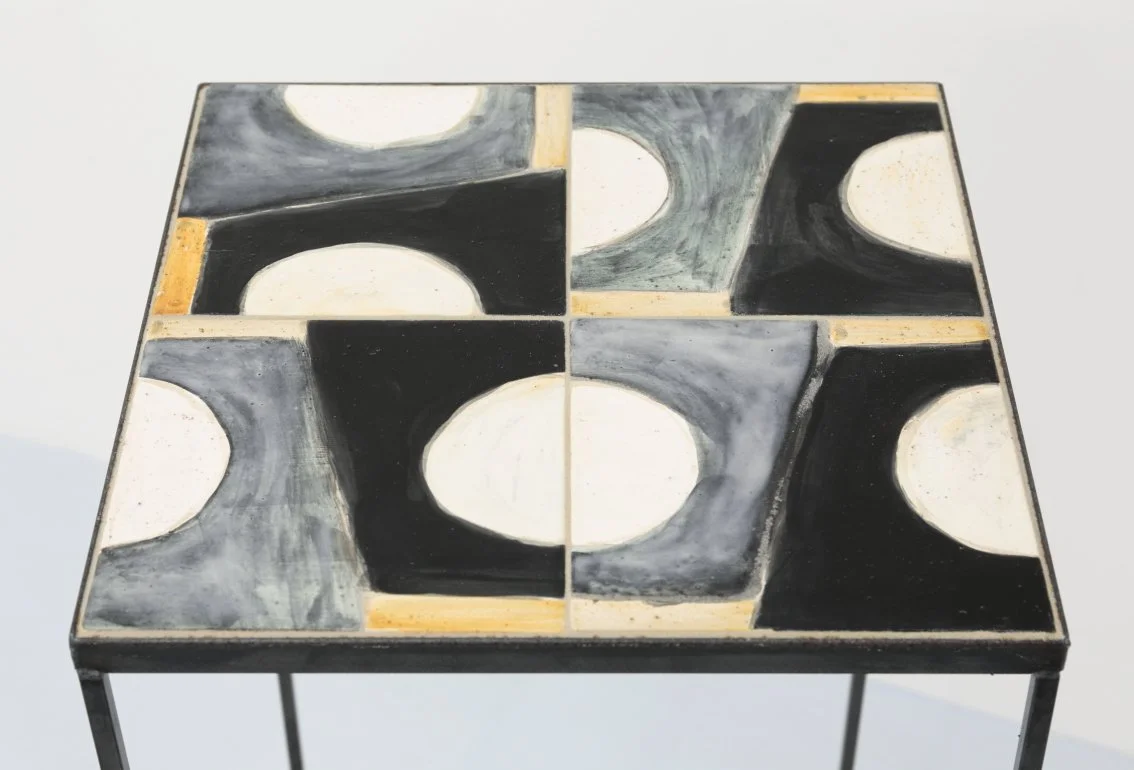
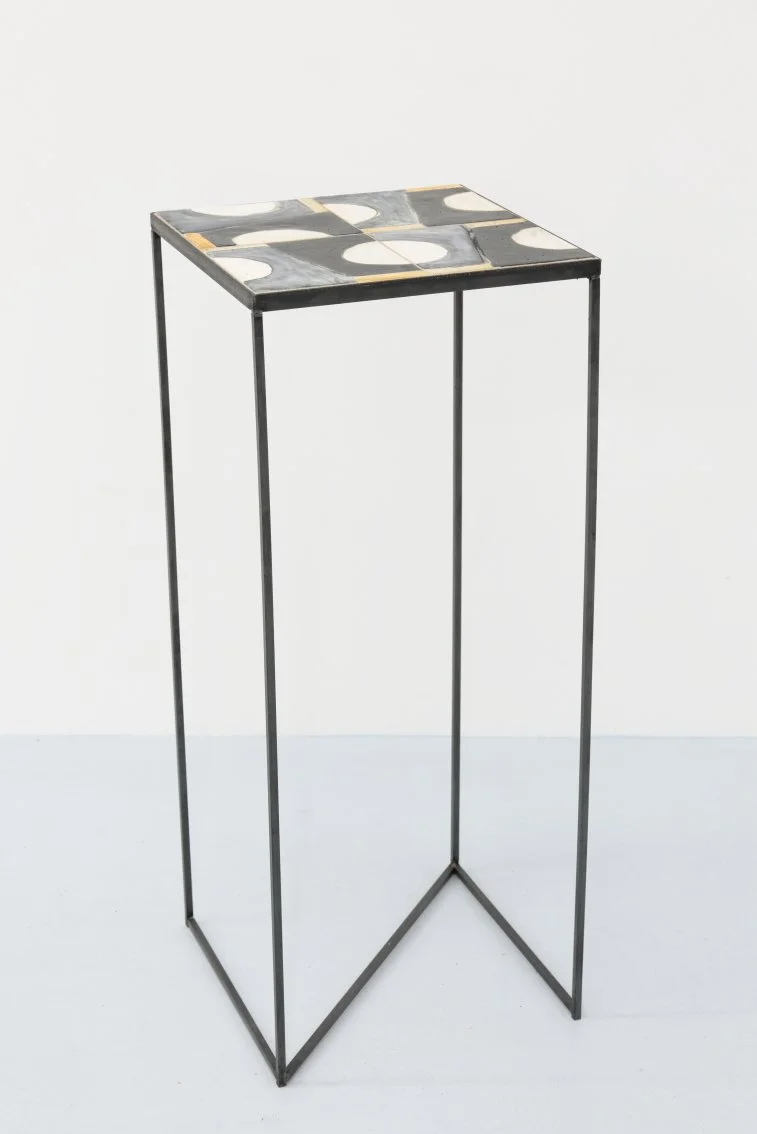
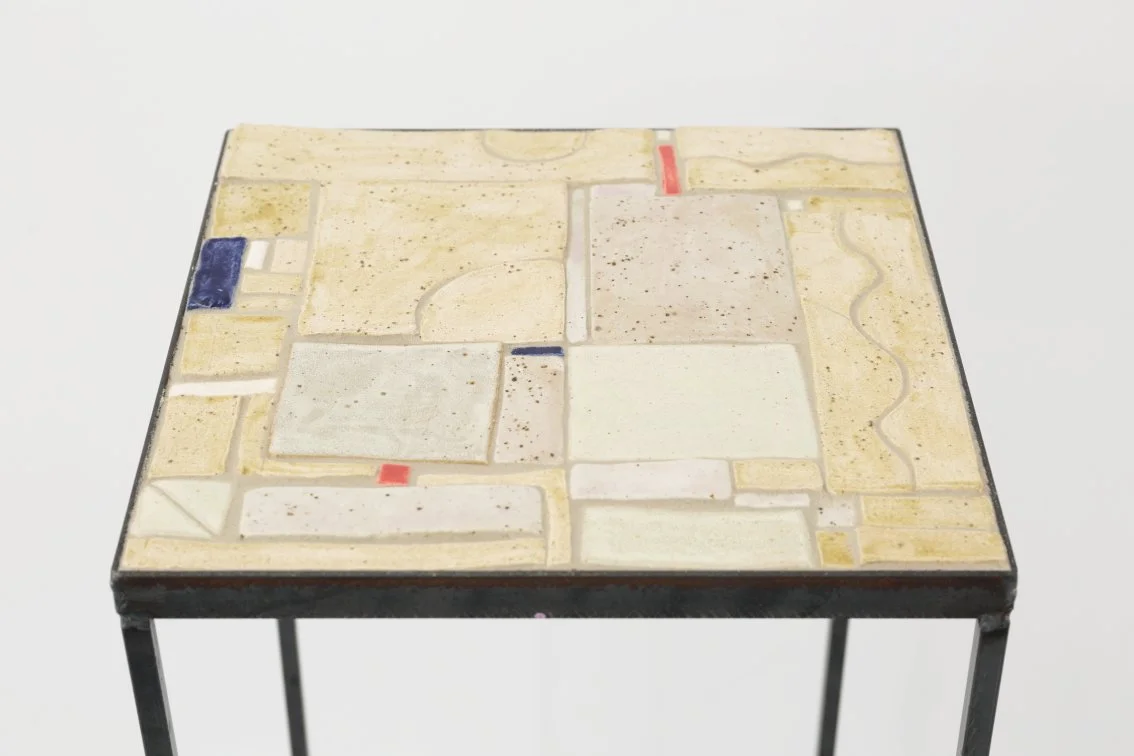
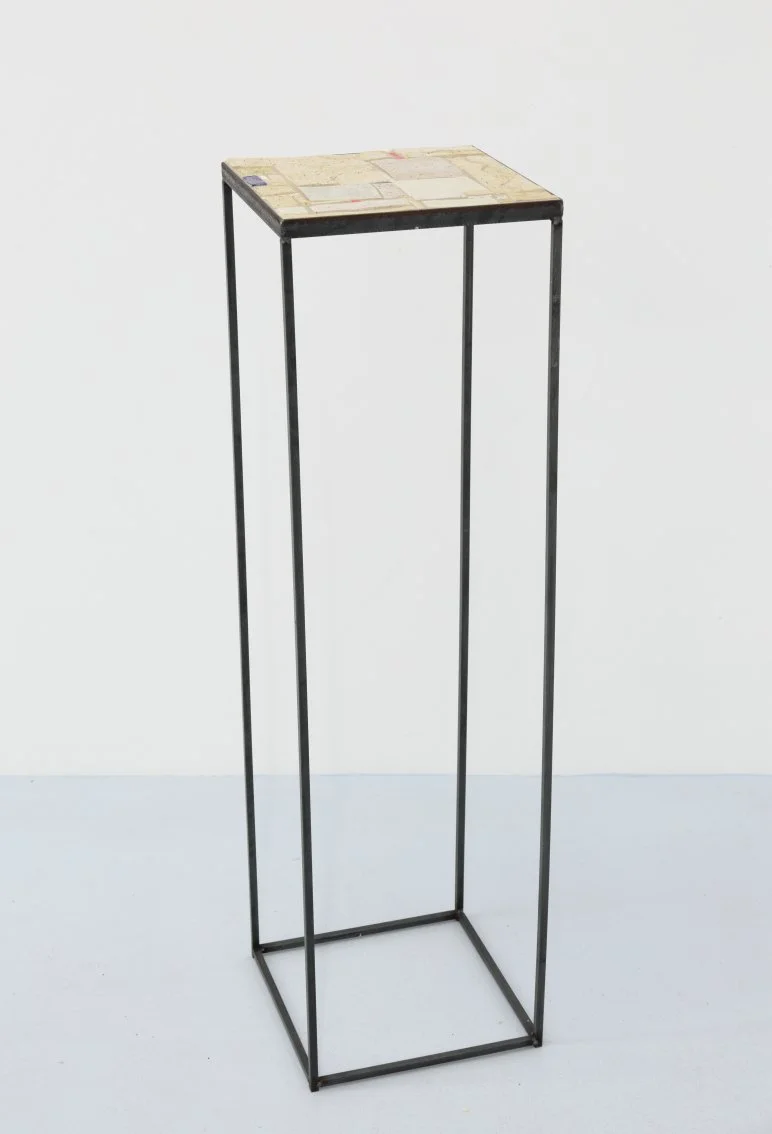
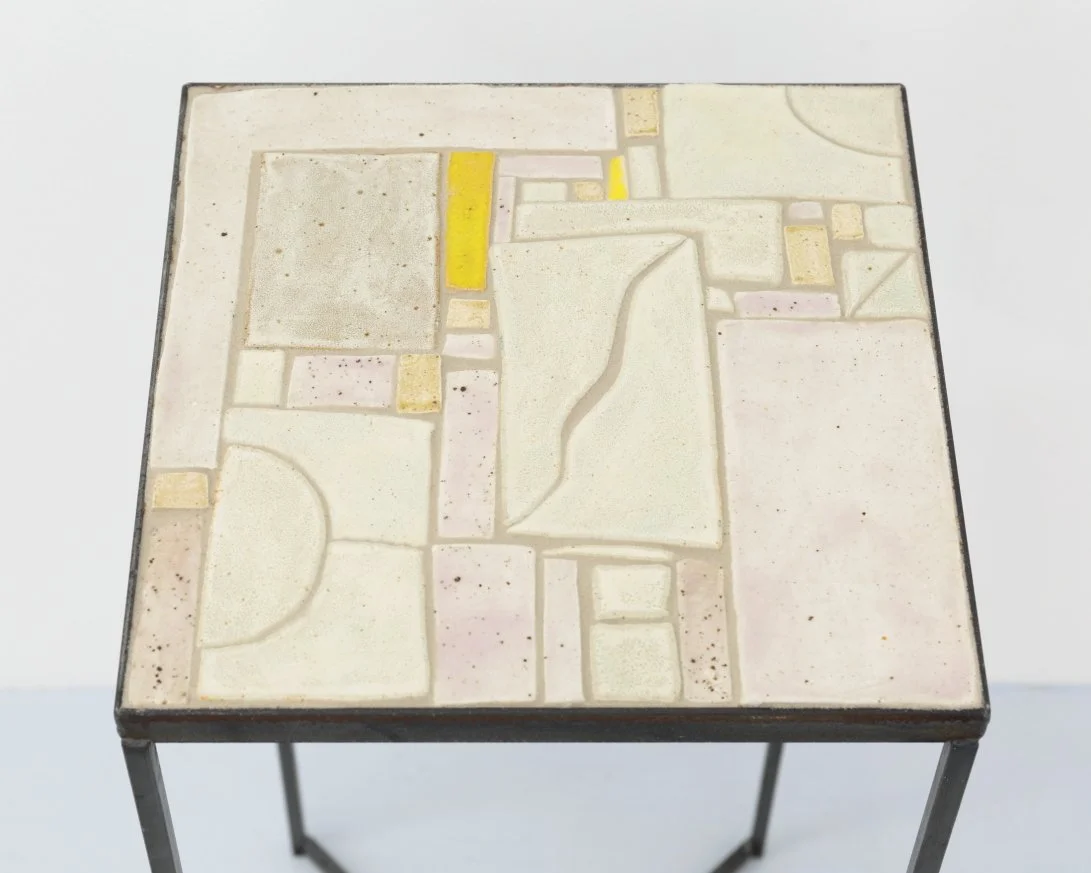
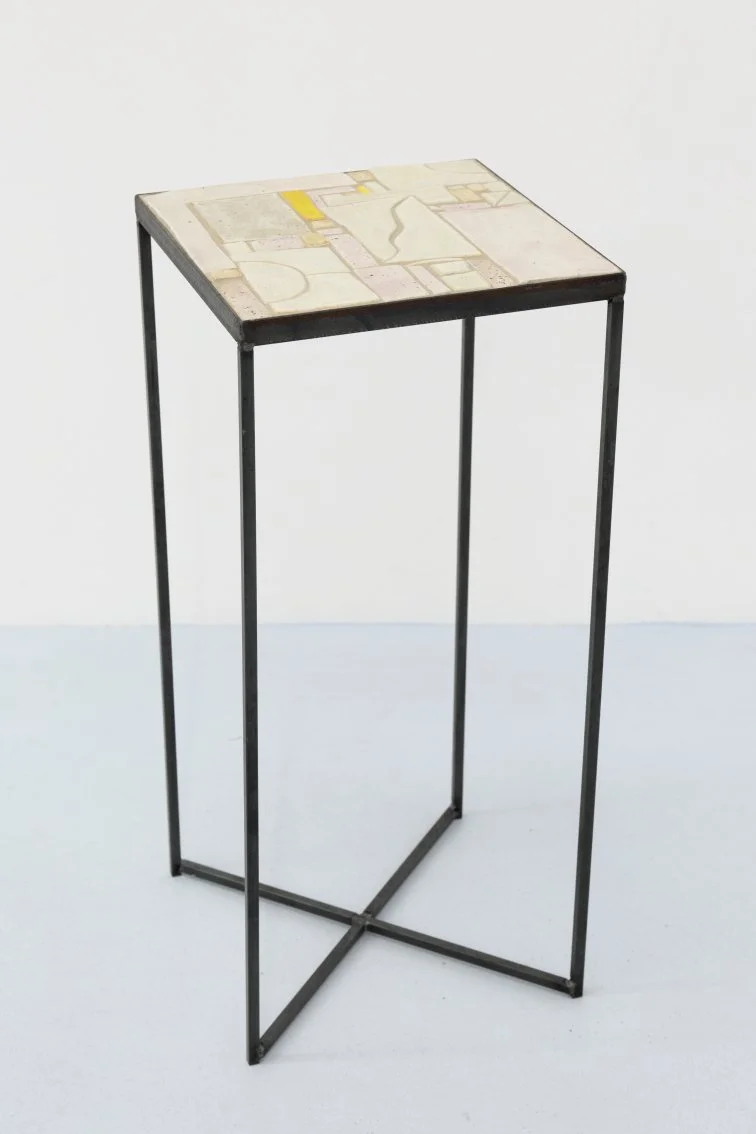
Kate Tucker’s hybrid painting/ sculptures were created through a collage-like process, where paintings were cut and combined, with some pieces left raw and others subjected to continuous iterative changes. Amongst the various media of these works are fabrics digitally printed with images of Tucker’s previous work, which were then cut, painted and reconfigured. Tucker has also referenced patchwork imagery from DIY and craft books from the 1960s-80s in these paintings, seeking to incorporate material that denotes a sense of comfort for her.
Tucker’s paintings are built through repetitive layering of various materials. This process emerged as a reaction to the restrictions of painting traditionally onto pre-stretched linens. Rather than working within a defined area and surface, each layer became an opportunity to change the form as well as the content of the work. The result is a series of irregularly shaped paintings that represent an accumulation of numerous material based experiments, rather than the realisation of a pre-conceived idea. The freedom afforded by this has impacted on the way Tucker uses paint to form compositions and make marks. As paint is used to stain calico, which is then wrapped around the substrate, any painting that is done with a brush must co-habit with a different iteration of itself. Tucker samples different materials and reconfigures paintings with the carefree attitude of someone ‘playing’ in Photoshop. However the materials are laboriously embedded and equalised through multiple layers of acrylic mediums, gradually losing their characteristics to become part of an ambiguous collective form.
Ceramic bases hold and support the paintings, with the content of each painting informed by the structure of its base. A third support structure has been added to this body of work, with the introduction of Tucker’s ‘Elevations’, a series of steel plinths each topped with tiled and interlocking hand-built ceramic forms.
-
Kate Tucker is a Melbourne/Naarm-based artist. Her recent projects include solo exhibitions at Daine Singer, Galerie Pompom, Art Stage Singapore, Chapter House Lane, c3 Contemporary Art Space, Platform and Helen Gory, and group exhibitions at NADA New York, Sutton Projects, Dutton Gallery, Caves, Tristian Koenig, SPRING1883, Incinerator Gallery, Bus Projects and LON Gallery. Tucker has been a finalist in the Arthur Guy Memorial Painting Prize, Geelong Contemporary Art Prize, The Substation Prize, Albany Art Prize, Bayside Acquisitive Art Prize, The Churchie Emerging Art Prize, Geelong Acquisitive Print Awards, and The Archibald Prize. Her work is held in collections including Artbank and Shepparton Art Museum. Tucker graduated from the Victorian College of the Arts in 2009.
Matt Arbuckle
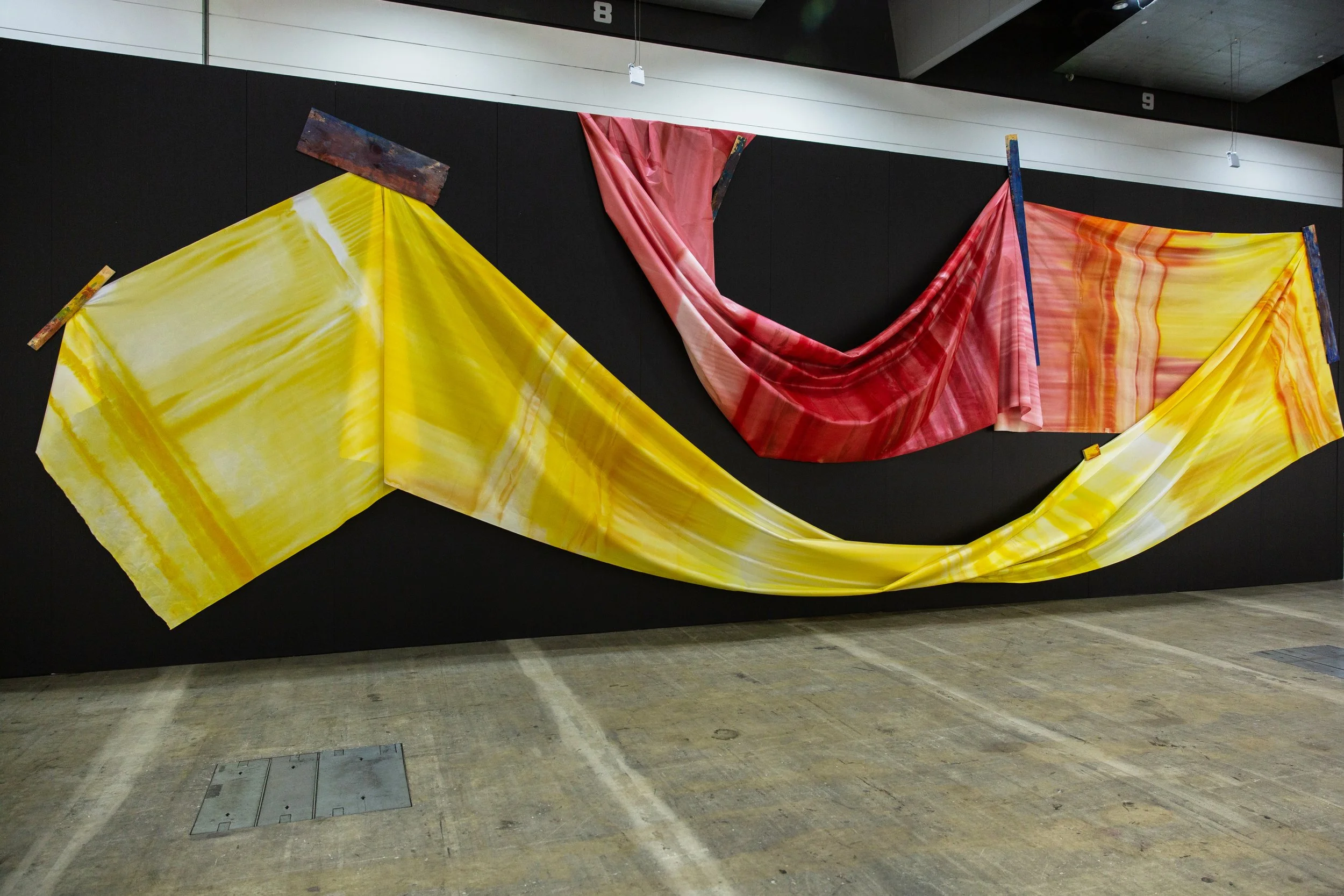


Matt Arbuckle’s practice is a process-driven exploration of place, representing landscapes that are conceptualised through their very making. Through an experimental practice, Arbuckle uses elements of traditional Japanese shibori dyeing techniques to create abstract compositions by wrapping, twisting, folding, and draping fabric over found surfaces and structures. The resulting paintings use depth and movement to trace and reveal abstract memories, imprinting the experience of place into the artwork.
In Recto Verso, Arbuckle has experimented with fabric manipulation to produce a unique abstract visual landscape. To create this installation, Arbuckle used a custom designed ‘roll-to-roll’ machine, which rolled the fabric from one part of the machine to the other. In this process there was only ever 1-2 metres of fabric available for the artist to paint on. This meant the entire painting was only revealed once unrolled. The 50 metre length of the finished painting is unfurled, draped and tethered throughout the space, it is infinitely reconfigurable in response to the architecture it is located within.
-
Matt Arbuckle (b.1987, Auckland, NZ) splits his time living and working as a practicing artist between Tāmaki Makaurau, Auckland, New Zealand and Naarm, Melbourne, Australia. He graduated from Unitec Institute of Technology, Auckland, with a Bachelor of Fine Arts in 2009. Arbuckle has held solo exhibitions at Daine Singer (Melbourne), Two Rooms (Auckland), Vermont Studio Centre (USA), Bus Projects (Melbourne), Parlour Projects (Hawks Bay, New Zealand), Tim Melville (Auckland), Paulnache Gallery (Gisborne, New Zealand), Baustelle Gallery (Berlin). Group exhibitions include ChaShama (New York), Drill Hall Gallery (Canberra), Hugo Michell Gallery (Adelaide), TCB (Melbourne), Hanging Valley (Melbourne), The Pah Homestead, TSB Wallace Arts Trust (Auckland), Arbuckle has also participated in Sydney Contemporary, and Melbourne and Auckland art fairs.In 2017 Arbuckle was the recipient of the James Wallace Art Fellowship to Vermont Studio Centre, USA. He has held recent solo exhibitions in 2020 and 2021 at Two Rooms (Auckland) and Hastings City Art Gallery (Hastings, New Zealand). In 2021 he undertook a residency at Driving Creek (New Zealand). Arbuckle’s work is held in the Chartwell Collection, Auckland Art Gallery Toi o Tamaki, James Wallace Arts Trust and Arthur Roe Collection.